
What is the Newcomb model of communication?
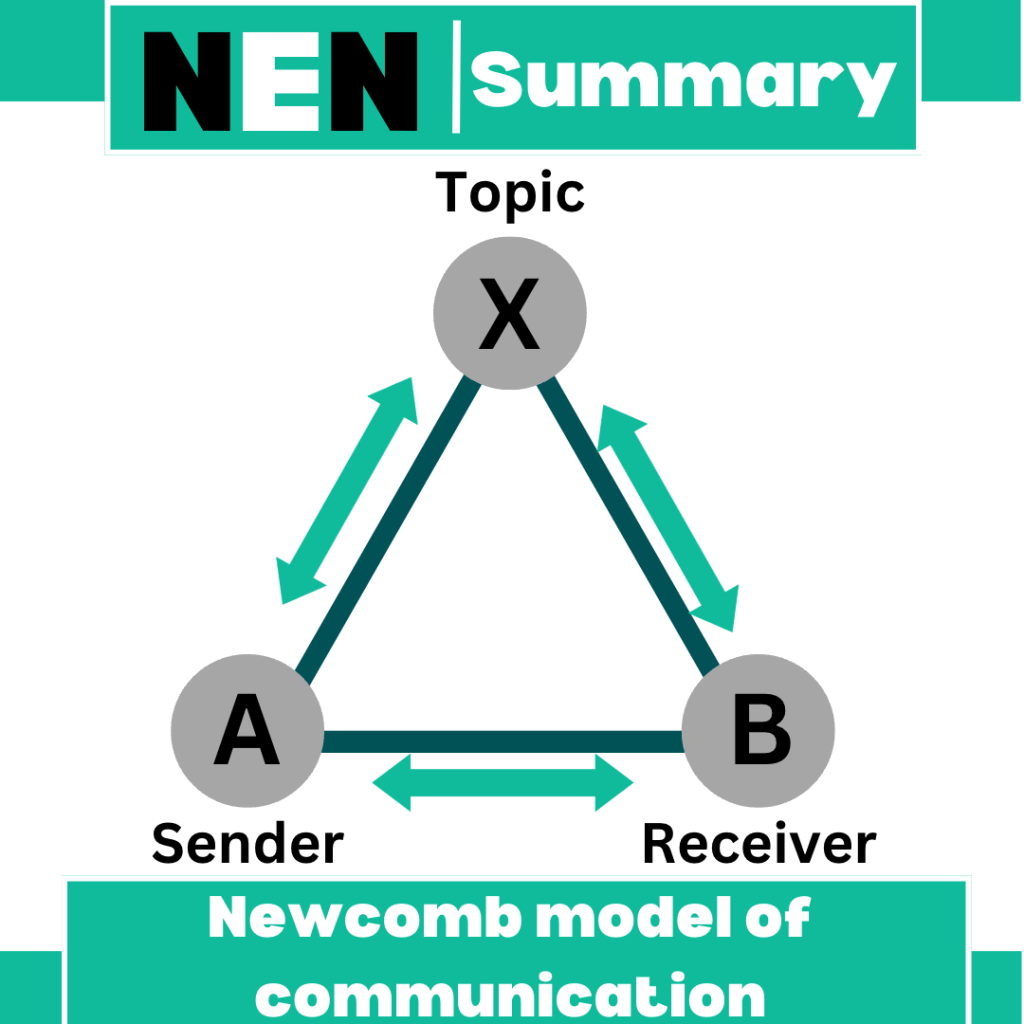
The Newcomb model explores a specific aspect of communication theory and explains how communication can and is used and influenced. Within this model, communication is used for a social purpose, showing all communication as a means of building and maintaining relationships between people. Within the Newcomb model, communication is a way in which people orient themselves with each other and their environment.
As this model explores the social aspects and importance of communication, it delves into the relationship between the sender and receiver, specifically that of a social relationship. A common example of this relationship is a student and a teacher. However, this relationship can be even broader, such as the government and the public or, as Newcomb states, a newspaper and its readers. Each of these connections requires a relationship to develop for effective communication to take place and for meaning to be reliably shared.
The Newcomb model of communication consists of three elements, which can be simplified as the following;
- The Sender
- The Receiver
- The Topic
Newcomb, however, used the following wording to highlight each of the three elements.
- A –Sender
- B – Receiver
- X – Topic (matter of concern).
The message within the model
A key aspect of this communication model comes from the meaning of the message itself. This directly links to this model’s focus on the social aspect of communicating. When it comes to communicating, the message is not always a neutral topic, and as such, this can influence how effective the communication can be.
The meaning of this is that the sender and receiver might have a predisposition to the topic and have an attached attitude towards it, which will influence how the conversation goes and its effectiveness. This also means that the topic itself can be emotive and, as such, influence the communication in the same way as the sender and receiver having an attached attitude.
Newcomb displayed this intercepting relation and attached attitude as follows;
A -Attitude towards X
A -Attraction towards B
B -Attitude towards X
B-Attraction towards A
Aside from this, within the Newcomb communication model, the topic or “X” does not always relate to a verbal topic. It can also be a third person, issue, event or policy.
 Nottingham Education Network