
Threshold Learning Theory
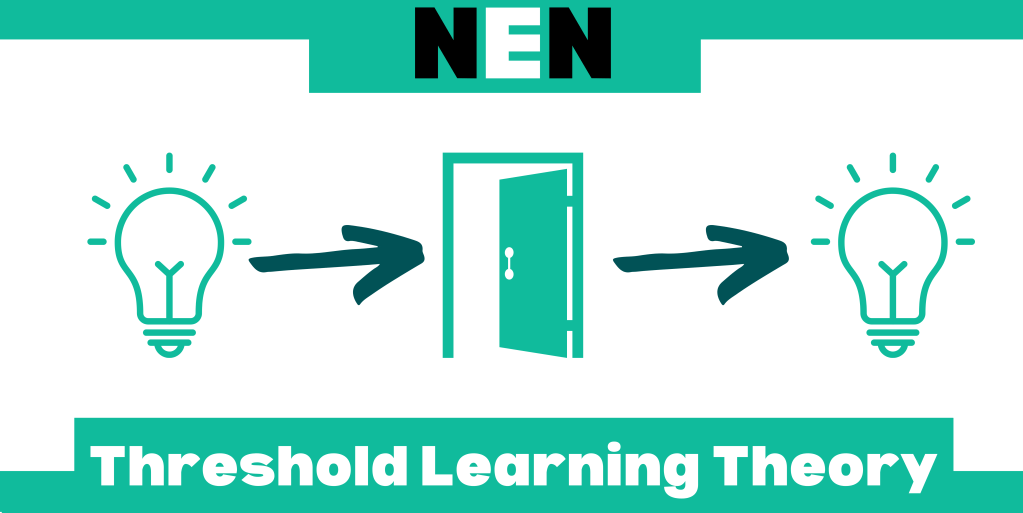
Threshold learning theory describes the connection between two sets of knowledge. This connection deepens understanding of the overall topic or concept. A more visual description is a door between two sets of knowledge that allows them to interact for the first time.
This theory can be divided into two parts. The first is that of core concepts, also sometimes referred to as threshold knowledge, and the second is threshold concepts.
Core concepts
A core concept is a conceptual “building block” that advances an individual’s understanding of the topic. These are the small parts of learning that occur over time as you study the topic, which in turn allows you to understand the whole topic better. However, this greater understanding can occur only when enough core concepts connect to form a threshold concept.
Threshold concepts
Unlike core concepts, which are the building blocks of sections within a whole topic, a threshold concept is likely to be a significant shift in how an individual sees and understands the overall topic or its larger connections.
A threshold concept is likely irreversible because it shapes and develops an individual’s understanding and thinking about the topic. For example, before a threshold concept occurs, an individual might know something about the topic, but only within the context and confines it has been provided or taught.
The threshold also creates a connection: without it, the individual would be unable to apply their current thinking easily in other contexts.

